
Start with who supplies your water and takes your waste
Inside the City of Emmett, water is pumped from three city wells, numbered 6, 8 and 9 in the city's 2025 water quality report, and the city runs a sewer collection system. New Plymouth's 2023 report describes a three-well system with a fourth well held as an emergency back-up. Horseshoe Bend's water supply draws from the Payette River and treats it.
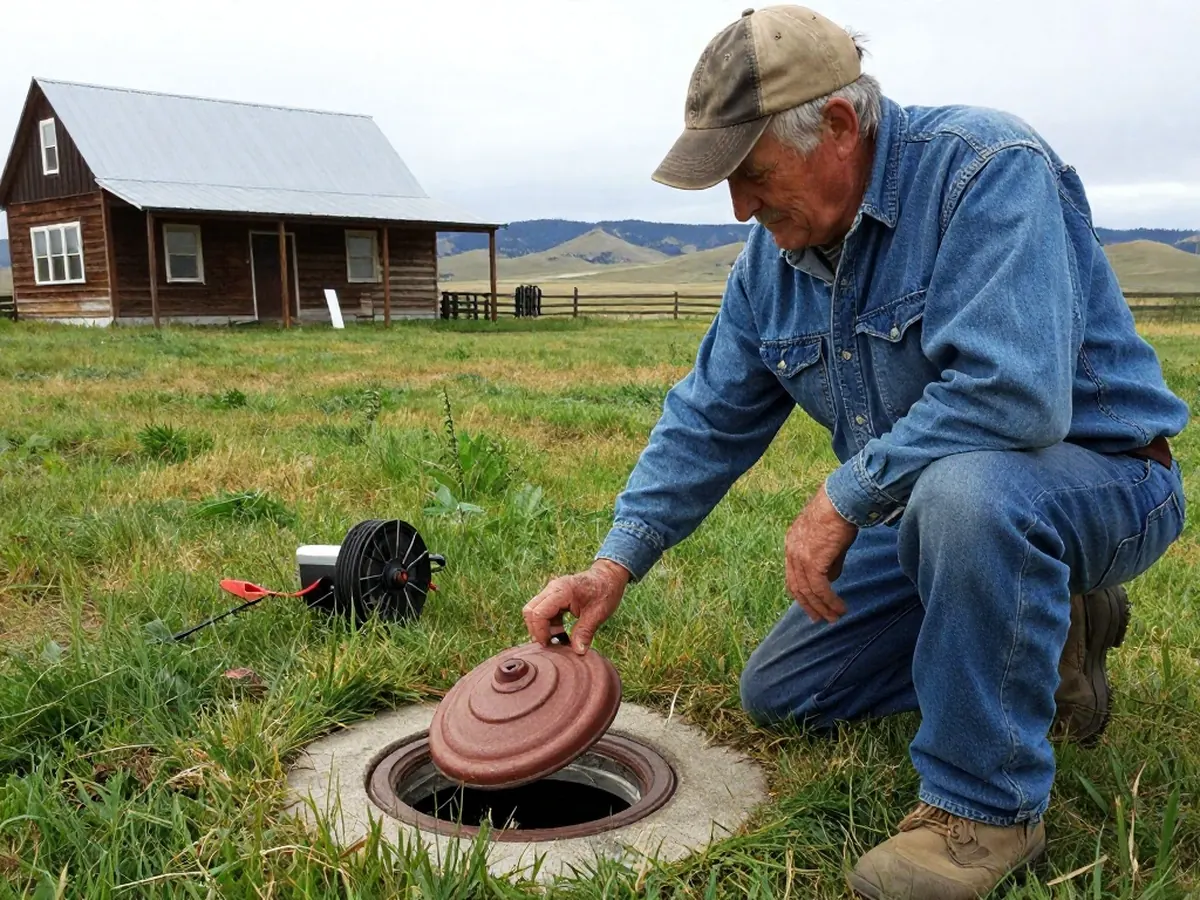
A home beyond those service areas can have its own well and its own septic tank. In that case the owner carries the upkeep. Southwest District Health says the owner of a private supply is the one who must maintain it and keep it safe to drink.
That split matters because it decides what ends at the property line. On a city system, the water quality report is the public record. On a private well, the test result is yours to order and to read.
Testing a private well
EPA recommends testing a private well every year for total coliform bacteria, nitrates, total dissolved solids and pH. It advises testing more often when young children, older adults, or pregnant or nursing people live in the home. It also says to test right away after flooding, nearby construction, a repair or replacement of the well system, or a change in taste, odor or color.
Southwest District Health says private systems have no testing regulations in Idaho, but the district offers education, advice and sampling for a nominal fee. Its courier fee is $10, the courier runs on Wednesdays only, and the Emmett drop-off cutoff is 10:30 a.m. Samples can also go straight to the Idaho Bureau of Laboratories in Boise, whose number is (208) 334-2235. EPA says to use a state-certified laboratory.
For lead, the district says to sample from an indoor cold tap used for drinking. The water should have sat still for at least 6 hours, and the aerator stays on. It says a result above 0.015 mg/L, or 15 ppb, is higher than recommended. It also warns against metal pipes and fittings after reverse osmosis or distiller treatment, because the treated water can pull lead and copper from them.
What a city report can and cannot tell you
City reports are a useful comparison, not a substitute for testing your own well. New Plymouth's 2023 report lists nitrate at 4.4 ppm against a 10 ppm limit for the public system. Emmett's 2025 report lists nitrate as not detected, and Horseshoe Bend's 2025 report gives no nitrate result. Those numbers describe the city supplies, not a well down the road.
None of the three reports gives a hardness figure. If a softener is on your list, start with a lab number for your own tap. USGS calls water hard at 121 to 180 mg/L and very hard above 180 mg/L. USGS adds that heating hard water can deposit calcium carbonate scale, which shortens equipment life and drives up heating costs.
Where house plumbing and the septic system meet
A septic tank and drainfield treat household wastewater slowly, so every gallon sent to them counts. EPA says indoor water use can reach 70 gallons per person per day. Toilets account for 25 to 30 percent of household use, and one leaky or running toilet can add up to 200 gallons a day. Fixing a running toilet or a dripping fixture takes load off the drainfield.
EPA also says to flush only human waste and toilet paper. It advises boiling water or a drain snake in place of chemical drain openers, and limited garbage disposal use because disposals add fats, grease and solids. It suggests spreading laundry across the week instead of washing everything in one day, which can flood the drainfield.
A plumber works on the pipes, fixtures and appliances inside the house and on the line that leaves it. Idaho Code 54-2602 exempts contractors who regularly install or repair sewers, septic systems and water or drainage lines outside the building foundation from the plumbing contractor certificate. So work outside the foundation walls may fall to a septic or excavation contractor instead.
The tank, the drainfield and the schedule
The septic tank has a T-shaped outlet that keeps sludge and scum from leaving the tank, and the drainfield removes contaminants from the liquid that does. EPA says to have an average household system inspected at least every three years, and a system with float switches, pumps or other mechanical parts about once a year. It says household tanks are typically pumped every three to five years, and it asks owners to keep the service records.
Protecting the drainfield is mostly about what stays off it. EPA says not to park or drive on it, and not to build on it or lay concrete or asphalt over it. It also says not to plant trees, shrubs or vegetable gardens there, and to keep roof drains and sump pumps pointed away from it.
Permits, approvals and questions to ask
In this part of Idaho, a septic tank and drainfield need a permit from Southwest District Health. Before it issues one, the district sends someone to evaluate the site, and the applicant must have a backhoe dig a ten-foot test hole. Permits and site evaluations cannot be transferred between owners. Septic installers need one of two registrations, basic or complex. Gem County's building page says a district permit approving the site plan has been required for building permits since July 3, 2023. IDWR, the state water resources department, regulates and permits wells, and EPA advises using a certified well driller for new wells, changes and abandonment.
Plumbing inside and at the house still follows Idaho Code 54-2620. The state wants a permit before anyone installs or alters plumbing and its service lines, unless a local program with an equivalent code covers the work. DOPL's fee worksheet lists a $65 sewer line permit and a $65 line for switching a home from septic to city sewer. Boise County, where Horseshoe Bend sits, is in a different public health district from Gem and Payette counties under Idaho Code 39-408.
Before any work begins, ask who is buying each permit and what the permit number is. Ask to see the contractor in DOPL's license search, and ask the septic installer for the registration. Ask when the tank was last inspected and pumped, and keep the answer. Call 811 before digging so buried lines are marked.
When is a well or septic problem more than a DIY job?
The checks in this guide help you spot trouble early. They stop being enough when sewage rises in a drain, several fixtures back up at once or a test shows bacteria. A well pump that runs without end and wet ground over the drainfield are also signs to stop and get help.
Start with sewer line repair if waste water is surfacing, or drain cleaning if one line is slow. Make the call at (208) 285-7736 because the sooner a contractor sees it, the less ground and house it can reach.
Sources
- Southwest District Health, Water (private wells and sampling)
- Southwest District Health, Septic and Land Development
- U.S. EPA, How to Care for Your Septic System (updated Aug. 17, 2026)
- U.S. EPA, Protect Your Home's Water (private wells, updated Feb. 26, 2026)
- Gem County, Building Department
- Idaho Code 54-2620, Permits required, exceptions
- Idaho Code 54-2602, Exceptions (plumbing)
- Idaho Code 39-408, Public health districts
- DOPL, Application for Homeowner Plumbing Permit and fee worksheet (rev. 8/17/2022)
- DOPL State Plumbing Board (license types, license search, permits, inspections)
- City of Emmett, 2025 Water Quality Report (PWS ID3230012)
- City of New Plymouth, 2023 Consumer Confidence Report
- Horseshoe Bend Water Supply, 2025 Consumer Confidence Report (PWS ID4080024)
- USGS Water Science School, Hardness of Water
- Intermountain Gas Company, Safety (gas leaks, flame color, 811)
Checked 30 Oct 2026
Have this ready
Have your street address, the fixture or room involved, the day it began and whether the water is off. If you are renting, flag it with your landlord before you do anything else. Calls cover Emmett, New Plymouth and Horseshoe Bend, so make the call at (208) 285-7736 when you are ready.