
Softener and filter questions for Emmett-area water
Water Softeners in Emmett, ID
Water softener help in Emmett fits white crust on faucets, soap that will not lather or scale in the water heater. Make the call to (208) 285-7736 and talk it through, since the right pick begins with a test of your own water.
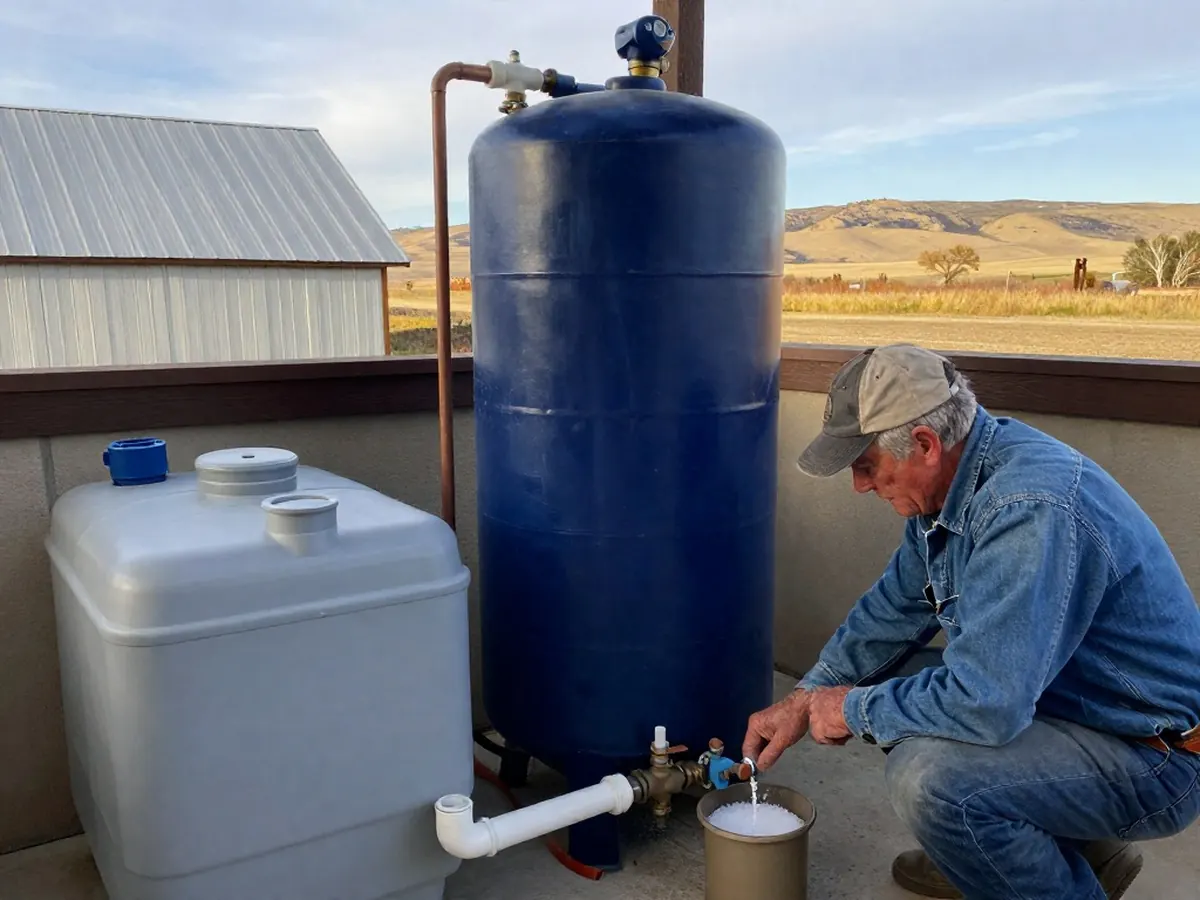
Signs to watch for
- White crust on faucets, showerheads and glassware
- Soap that does not lather and leaves film on skin or tile
- Scale inside kettles, coffee makers and the water heater
- Low flow from fixtures with mineral-clogged aerators
- Taste or odor you want to address at the tap
What often causes it
- Dissolved calcium and magnesium, which is what makes water hard
- Heat, which makes those minerals settle out as scale
- Iron, sulfur or sediment in a private well supply
- Sand or fine grit carried in from an older pipe or a well
- A softener that is out of salt or set for the wrong hardness
Stay with the checks you feel sure about. Leave water heater covers, gas connections and electrical panels closed, and if water is close to a light, an outlet or the panel, step back and call.
Checks you can make
- Ask your water utility for its latest water quality report, or test a sample if you use a private well.
- Look for crust at the faucet aerators and the showerheads, which shows where scale is building.
- If you already own a softener, make sure the brine tank has salt and the bypass valve sits where you expect it.
- Write down the hardness number from the report before you talk with anyone selling equipment.
Call right away if
- Water is dripping from the softener head, the brine tank or a bypass valve
- The softener's drain line is overflowing or backing up
- A well water test shows bacteria or nitrate above health limits. Treat that as a safety issue first and call the health district.
- The unit is plugged in and the cord, the plug or the outlet is wet
What a visit covers
- You call (208) 285-7736, say what you see at the taps and where your water comes from, so the contractor can plan a visit.
- Review your water test or utility report and talk through what you want the treatment to do.
- Confirm there is room, drain access, a power outlet and a place to run the discharge.
- Match the unit size to household use and water hardness, so it regenerates sensibly.
- Explain where the softener drain connects, and what the permit and inspection rules are.
- Set up the control head and show you how to add salt and use the bypass.
Around Emmett
- DOPL's fee worksheet has a $65 line for water conditioning equipment. Idaho Code 54-2602 also exempts water treatment installations in homes from the plumbing certificate requirement when a qualified DOPL agent inspects the work.
- None of the latest water reports from Emmett (2025), New Plymouth (2023) or Horseshoe Bend (2025) gives a hardness number. USGS calls water hard at 121 to 180 mg/L and very hard above 180 mg/L, so a number from your supplier or a lab is the starting point.
- On a private well, Southwest District Health says the owner is responsible for keeping the water safe, and the district offers sampling and advice. The district says private systems have no testing regulations.
Idaho permit basics
Idaho asks for a permit from its Division of Occupational and Professional Licenses to install or alter plumbing, unless a local program with an equivalent code covers the work. Clearing a clog or patching a leak does not call for a permit, provided nothing about the layout of pipes, valves or fixtures changes.
Questions homeowners ask
- How urgent is a softener or water quality problem?
- Use the ten-point check. Rated 8 to 10, the softener leaks, its drain overflows or a well test shows bacteria; unplug a wet unit and call (208) 285-7736 now, and call the health district for bacteria. Rated 4 to 7, such as heavy crust or low flow at the taps, call this week, because scale builds up. Rated 1 to 3, such as a taste you dislike, find your water's hardness first, then call (208) 285-7736.
- How do I find out how hard my water is?
- Ask your water supplier first. The latest reports from Emmett, New Plymouth and Horseshoe Bend do not list hardness, so a lab test or a reliable home kit is the next step. On a private well, Southwest District Health offers sampling and advice.
- Does a softener need a permit?
- The state's fee worksheet puts water conditioning equipment at $65. Separately, Idaho Code 54-2602 exempts home water treatment work from the plumbing certificate when a DOPL agent inspects it. Ask DOPL at 208-334-3950 how that applies before the unit goes in.
- Does a softener make water safer to drink?
- Not by itself. A softener targets the minerals that cause hardness. Bacteria, nitrate and other contaminants need their own test and their own treatment, so test first and match the equipment to the result.
- Does this cover New Plymouth and Horseshoe Bend?
- Yes. Softener help reaches New Plymouth and Horseshoe Bend along with Emmett. Call (208) 285-7736 because a contractor nearby can help you plan from a real test.
Sources
- DOPL, Application for Homeowner Plumbing Permit and fee worksheet (rev. 8/17/2022)
- Idaho Code 54-2602, Exceptions (plumbing)
- USGS Water Science School, Hardness of Water
- City of Emmett, 2025 Water Quality Report (PWS ID3230012)
- City of New Plymouth, 2023 Consumer Confidence Report
- Horseshoe Bend Water Supply, 2025 Consumer Confidence Report (PWS ID4080024)
- Southwest District Health, Water (private wells and sampling)
Checked 30 Oct 2026
Have this ready
Have your street address, the fixture or room involved, the day it began and whether the water is off. If you are renting, flag it with your landlord before you do anything else. Calls cover Emmett, New Plymouth and Horseshoe Bend, so make the call at (208) 285-7736 when you are ready.